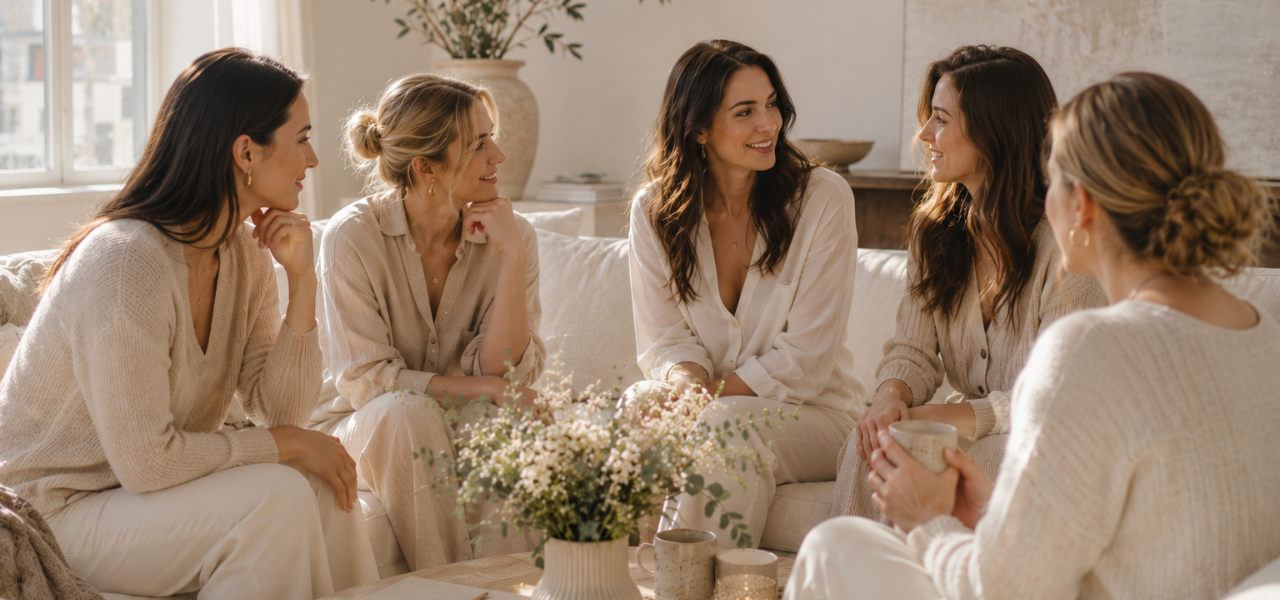
The Art of Community: Creating a Place Where People Belong
I’ve spent a large amount of my life bringing people together.
From building a ballroom dance school and planning social events in Las Vegas to living in a small village in Ukraine when I was in the Peace Corps, building relationships has been an important part of my work. On top of that, in an effort to expand my own circle even further, I’ve joined business groups, coaching communities, women’s organizations, and more networking events than I could possibly count.
Looking back, I realize many of the most important opportunities, friendships, and turning points in my life came spontaneously through people, not because I had necessarily planned them out all on my own.
That made me curious.
What made some communities so much more meaningful than others?
When I started to think about that question, I realized my Peace Corps experience had already taught me a lot about it. One of the most important lessons I learned was to stop asking, “What do I want to create?” and start asking,
“What does this community need?”
My training taught me to closely look at the community I was serving, understand what was needed, and create projects that responded directly to those needs.
That way of thinking has stayed with me ever since. When I returned home after my Peace Corps service, I found myself looking at our own communities through the same lens. What I kept seeing was a quiet kind of loneliness and disconnection. People had work, obligations, and routines, but far fewer opportunities to genuinely connect, play, and belong.
I could see that for their own well-being, people needed more opportunities to form meaningful relationships outside of work and their normal day-to-day routines.
Looking back on that, I see how I naturally continued my service after the Peace Corps without even realizing it.
For me, dance became the vehicle. It naturally gave people a reason to interact, laugh, play, and be vulnerable without forcing it. It brought people together and created the kind of connection I felt was missing.
So I built a community and eventually a business around the need I was responding to. I knew it was a special opportunity because I wasn’t just teaching dance.
I was creating meaningful experiences of connection, joy, and camaraderie.
Based on what I was seeing, I believed those experiences were something many people were desperately missing.
Over the next several years, I watched something remarkable happen. People originally walked through the door because they wanted to learn to dance, but they stayed for more than that. Thursday night became part of their week because it wasn’t just a beginner ballroom dance class; it was an hour of connection they didn’t get anywhere else in their lives. It was laughing, bonding, playing, doing something daunting (dancing, hello!), and looking silly together.
The relationships they built within that community meant a lot to them because
…And they were able to experience life differently from their normal grind.
Some of them hadn’t had that much fun since childhood. After class, they would continue enjoying the good vibes and connections they had made and grab a meal or drink at the Italian restaurant next door because they didn’t want the night to end.
That feeling of connection and feeling alive again brought them in every week. They knew who would be there and they knew they belonged.
It wasn’t about me as the instructor or becoming a dance expert; it was truly about the connection and what happened between the people in that room.
In the modern-day world of living in the rat race, many of us are starved of this very thing: the human need to be a part of something meaningful and feel high on life. So I ran with it and started advertising the class for the result it produced.
It wasn’t just a dance class; it was feeling alive again and truly experiencing a state of well-being.
This life experience also helped me understand the following:
They gave people enough time to get to know each other, and there was a strong sense of belonging and that your absence would be noticed.
That is where community begins for me, and this is why I believe this:
You create a meaningful community by helping people feel like they matter.
Over time, members of the group become important to one another, and that feeling of mattering becomes the fuel we need to reach our human potential. It gives us the confidence, support, and sense of purpose to make a difference in our own lives, create an impact in the lives of others, and even leave a legacy.
Culture Doesn’t Happen by Accident
…And great communities don’t happen by accident either!
There is usually someone paying close attention to the experience people are having and intentionally shaping the culture of the group.
Long before I had language for this, I was always captivated by just noticing the energy in whatever room I was in. From afar, I’d notice who was uncomfortable, who needed to be brought into the conversation, and which personalities might get along. I knew when people needed encouragement or when the entire room needed permission to laugh at itself.
As an instructor, I had a tremendous amount of influence over the energy and what became “normal” in that room. If I laughed, played, and made it safe to look ridiculous, they followed my lead. And of course, if I treated mistakes as embarrassing, the students would become more self-conscious and probably wouldn’t come back again.
Eventually, this trickled down to the point where I didn’t have to do it anymore. The more experienced students began doing the same thing I had done for them with the newer students.
That’s when I knew a culture had been born within my community.
At some point, they were no longer just individuals who happened to take the same dance class every week. They had developed a sense of togetherness and a shared identity.
Anyone trying to create community needs to understand that their role goes beyond organizing an event.
You are facilitating the relationships in the room.
Especially in the beginning, when people are deciding whether they belong, this facilitation is imperative!
It’s crucial to make thoughtful introductions, remember what people are working on, ask better questions, and help establish how people treat one another. You have a limited window to shape that early experience, and if people don’t feel a connection or a belonging, they probably won’t return.
However, someone, perhaps you, has to model it first. That requires the kind of leadership that notices what people need and intentionally creates the conditions for it to flourish.
Community Changes What Feels Normal
Once a culture has been established within a community, something else begins to happen: the community starts influencing the people within it.
The people around us shape our perception of what is normal and what feels possible.
That is why community has the power to be so influential.
I know that when I am surrounded by people who are building businesses, speaking, writing books, or creating something new, I hear how they are navigating challenges and become exposed to ideas and opportunities I may never have encountered on my own.
Whether we realize it or not, human beings take cues from the groups we identify with, and the behavior we see repeatedly influences our own expectations and choices. A community where people regularly share ideas and take action creates a very different environment from one where everyone remains a passive observer.
That’s why I believe community adds so much value to any business or organization.
An organization can strive to serve its purpose, but what it cannot create is the relationships that naturally develop between its members and colleagues.
It cannot create every connection, shared insight, idea, life lesson, or resource that people bring into the room.
A community can do all of that and extend the work far beyond its original purpose. Members witness one another making progress, encountering setbacks, adjusting, and trying again.
Community Makes Change Sustainable
The more I coach, the more I think about what happens after the classes and sessions end. A client can have a profound realization during a conversation with me, but when it’s time to return to their everyday life, how do we help those new ways of being actually stick?
At the end of the day, I don’t only want to help a person identify what they want and what’s holding them back. I want to help them create a realistic plan that translates into their everyday life. And I also know that what happens after our work together matters just as much.
The following questions need exploration and consideration:
1.) Who are they talking to regularly?
2.) What kinds of conversations are they having?
3.) What has become normal among the people they spend time with?
4.) Do they have access to people who challenge their thinking, share resources, encourage their growth, or open doors they may not have known existed?
Those are the kinds of questions I find myself asking more and more.
These questions have become increasingly important to the work I do through Femme Systems™.
When I talk about systems, I am not only interested in processes and procedures. I am interested in the bigger picture.
Systems Thinking begins by looking underneath an outcome and asking what is actually creating it.
For example:
Heck, what are the “systems” supporting their happiness?
It’s exhausting to go at it alone. This is why I see community as a natural extension of my coaching practice and why I continue facilitating social groups that create opportunities for people to meet one another and experience the support and belonging we all need to stay sane.
We need to create environments where people have enough in common to begin meaningful conversations, enough opportunity to dig deeper, and enough consistency for those relationships to continue and their new habits to solidify.
You might not be able to create belonging in one evening, but you can be intentional about creating the conditions for it.
As leaders, we have the privilege of choosing to pay attention to the experience people are having and facilitate the kind of connection that rarely happens on its own.
It’s important to keep in mind who is in the room, why they need to know one another, how you will help them begin a meaningful conversation, and whether there is a clear opportunity to continue it.
An event can bring people together, but…
Community can only begin when people feel seen, begin to belong, and become important.
Important enough to one another that they want to keep coming back.
Key Takeaways
- Start with the need and not the event you want to create
- Great communities are intentionally cultivated
- Culture is modeled before it becomes self-sustaining
- Community changes what feels normal, and what feels normal changes people
- Lasting transformation is supported by the environments we return to every day
- People flourish when they feel seen, valued, and important to one another
Four Things that Make a Community Thrive
People feel seen
They feel like they belong and are accepted as they are.
Connections run deep
People go beyond small talk and create real relationships.
There’s a sense of purpose
People feel they’re part of something meaningful.
People keep showing up
They look forward to it, not because they have to, but because they want to.
Frequently Asked Questions on Creating Community
What does it mean to “start with the need”?
One of the most important lessons I learned in the Peace Corps was to stop asking, “What do I want to create?” and start asking, “What does this community need?” I still use that way of thinking today. Whether I’m coaching, building a community, or designing a program, I begin by identifying what’s missing before deciding how to respond. The event, business, workshop, or service becomes the vehicle—not the destination.
How do I start building a community?
Start with the need. Before planning the event, look at the people you want to serve and ask what they are not getting anywhere else. Then ask what experience could help meet that need and what vehicle could deliver that experience consistently. For me, the need was connection and play, the desired experience was belonging and feeling alive, and ballroom dance became the vehicle. The dance class was the event, but the community was the result.
What makes a community successful?
A successful community gives people a reason to connect, participate, and continue developing relationships over time. It is not simply about getting people into a room. People are more likely to become invested when they feel seen, believe they matter, and begin forming relationships that are valuable enough to bring them back.
How do you create a community people want to return to?
I believe you start with the need, not the event. Ask yourself what is missing for the people you want to serve. Is it connection, play, support, inspiration, opportunity, or a place to feel understood? Once you understand the deficit, you can create an experience that responds to it and choose the right vehicle to bring people together consistently.
What is the role of a community leader?
A community leader does more than organize events. Especially in the beginning, the leader helps shape the culture by paying attention to the experience people are having, making thoughtful introductions, asking better questions, and modeling how members treat one another. Over time, a strong community begins to carry that culture on its own.
Why is community valuable to a business, organization, or coaching practice?
Community can extend the impact of an organization far beyond its original purpose. Members bring their own experiences, ideas, connections, resources, and life lessons into the group. They learn from one another, see what is possible through the experiences of others, and create relationships that no business, organization, or coach could create alone.
Why does community matter so much?
Community matters because it changes what feels normal. The people we spend time with influence our thinking, expectations, habits, and sense of what is possible. When we surround ourselves with people who encourage growth, accountability, generosity, and action, those behaviors gradually become part of our own lives. Community isn’t just about belonging—it’s about creating an environment where people can become the person they aspire to be.
About the Author
Sophia Konstantinovna is a success & leadership coach and the founder of Femme Systems™, where she helps women create thriving relationships, confident leadership, profitable businesses, sustainable well-being, and a life they truly love.
A Returned Peace Corps Volunteer, Top 100 Women of Influence, and co-author with Dr. John Gray, Sophia has spent more than two decades bringing people together and designing environments where people can grow, belong, and truly feel alive, reaching their highest potential.
Community is just one example of a much bigger idea. Through Femme Systems™, she helps women intentionally create the systems that support lasting success, not only in business, but in relationships, leadership and personal well-being – the foundations of a fulfilling and successful life.
To learn more about 1:1 coaching, speaking, workshops, or upcoming women’s community events & retreats, explore Femme Systems™ or Connect with Sophia.
Ready to Create Lasting Change?
Whether you’re looking to strengthen your relationships, grow your business, become a more confident leader, or create a life that feels more fulfilling, you don’t have to do it alone.
→ Book a Complimentary Call with Sophia to gain clarity on where you are today, where you truly want to be, and whether Femme Systems™ is the right path to help you get there.